We’ve put together a detailed presentation that outlines the data, constraints, and recommended path forward.
👉 View the full Transportation Committee report and recommendations PPT
👉 View the full Transportation Committee report and recommendations PDF
Safety in Sylvan Highlands: Why It’s Getting Worse—and What We Can Do
Traffic safety in Sylvan Highlands—especially along Skyline—isn’t just a growing concern. It’s a predictable outcome of how our neighborhood is changing.
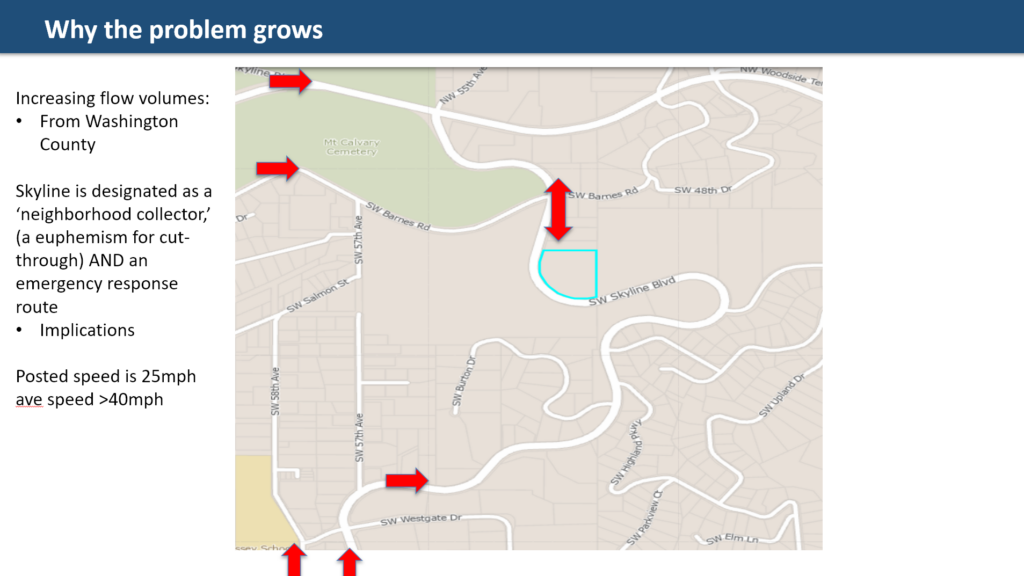
As development expands to the west, more drivers are using residential streets as cut-through routes. The result? Higher traffic volumes, faster speeds, and an increasing risk for people walking, biking, or simply pulling out of their driveways.
The challenge is that our streets weren’t built for this. Many lack sidewalks, curbs, and lighting. And while the posted speed is 25 mph, real-world speeds often exceed 40 mph—where the risk of serious injury or worse rises dramatically.
What We’ve Learned So Far
Over the past year, the Transportation Committee has been actively working the problem—engaging PBOT, the Fire Bureau, Washington County, and others to understand what’s possible.
A few key takeaways:
- Speed is the biggest driver of risk
- Not all solutions are equally effective
- City processes, funding, and priorities significantly shape what can get done
We’ve also learned that while incidents may feel common, a lack of reported data makes it harder to gain traction with the city.
What Actually Works
The data is clear: Speed cameras are one of the most effective tools available.
In Portland:
- Crashes dropped significantly at camera locations
- Extreme speeding declined sharply
- Cameras can even become revenue-positive quickly
But there’s a catch—placement is limited, and Skyline’s designation as both a neighborhood collector and emergency response route complicates implementation.
A Practical Path Forward
Rather than waiting for perfect solutions, the committee is focused on what’s achievable now, including:
- Radar/speed cameras (where possible)
- Rumble strips and traffic calming
- Improving sightlines
- Partnering locally (including with Odyssey School)
At the same time, we’re working to build awareness and momentum with city leaders.
Why This Is Hard to Fix
Progress is slowed by:
- Budget constraints
- Siloed city agencies
- Limited political visibility for our neighborhood
- A lack of documented incidents
In short: the problem is real—but not yet loud enough.
What Happens Next
We’re asking for community support to:
- Engage District 4 City Councilors
- Advocate for prioritization and funding
- Launch a neighborhood-wide awareness effort
With elections approaching, there’s a real opportunity to elevate this issue and push for action.
Learn More
We’ve put together a detailed presentation that outlines the data, constraints, and recommended path forward.
👉 View the full Transportation Committee report and recommendations PPT
👉 View the full Transportation Committee report and recommendations PDF